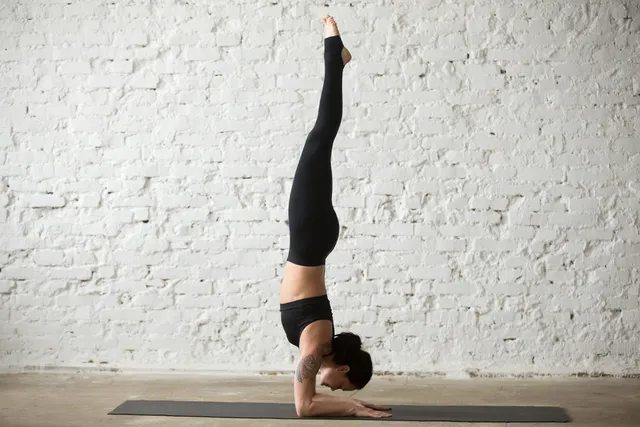
PINCHA MAYURASANA, balance on the forearms
Sequence on PINCHA MAYURASANA, balance on forearms.
This inversion posture which requires strength and lightness is more accessible because the foundation of this posture, the forearms, provides a feeling of balance and stability and does not compress the neck and the body is quite close to the ground.
Its physical benefits are the strengthening of the shoulders, arms, trunk and back. It opens up the shoulders, neck, chest and abdomen and increases the flow of fluids to the brain.
Its energy benefits are that it calms the brain and helps relieve anxiety and depression and the increased blood flow to the brain energizes and builds self-confidence. Working in balance increases concentration and attention.
Asanas come from two sources of inspiration: observation of animals, hence their names very often in relation to animals, and natural human postures.
Asana refers to a posture that one can maintain in a prolonged manner in stillness without discomfort for most of the time devoted fully to the practice of meditation.
For all of the more complex and less natural postures such as Pincha Mayurasana, their goals would be to strengthen and loosen all strained parts of the body in a posture taken during prolonged still meditation.
II.46 Sthira sukham asanam, Yoga-Sutra of Patanjali
"Firm and gentle is the posture"
The combination of firmness and softness is to achieve a state in which each element retains its active principle without mixing, where each is constantly balancing and adjusting in a constant balance of power.
Access the annotated class sequence with posture images and join the community of teachers!